Presently, thinking of the future
What does this mean?
Basically, at the beginning and end of everything you breathe life into, there’s you. You. You. You. As a child, we have people, things, and ideas that impact us. As a parent, the same. As a worker, service professional, practitioner, or whatever role we occupy, we’re impacted. My question for you is: How much of what you’re currently involved in positively impacts future you? Then, will future you be able to positively impact your legacy based on present-you’s lifestyle and choices?
Your legacy doesn’t always mean your children. Someone without children can have a legacy. What would people say about you and your work 100 years from now? Does that matter to you? If it doesn’t, no worries. Not everyone has a desire to be remembered beyond their lifetime.
If you do want to leave a “legacy”—a good name, resources, ideas, access, or something else meaningful—how will you do it? How can you best ensure that your work today reaches your legacy tomorrow?
So, as you engage your present, I hope you’ll take time to actively consider your future. We’ve created a blog below to discuss things along these lines. These writings speak to everyone, no matter your life cycle, the process you use, the people you’re connected to, or where you currently find yourself. There’s something here for everyone.

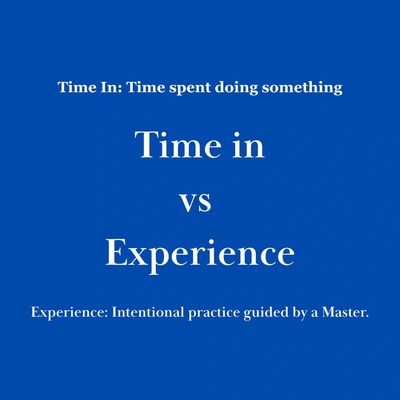
Time in vs Experience
We’ve been using elapsed time as evidence of experience when those aren’t necessarily the same measu
blog posted 9.4.26 (3min)
I realized this while sitting in a meeting with my team reviewing the quality of a service call. The technician who completed the work was someone I considered seasoned. He had been doing the job for more than 15 years, so naturally, I associated that time with experience.
But as we reviewed the call, we noticed several things that had been left undone.
We looked at the time spent, the tasks required, and the challenges he may have encountered.
Afterward, I called the technician and scheduled a time for us to return to the location together.
We corrected the work, and when we finished, I asked him a simple question:
“What did you learn?”
At FamilyTHINK, we define learning as “awareness.” What are you aware of now that you weren’t aware of before?
We discussed what we corrected, the challenges he encountered, how those challenges could be overcome, effective communication, and what completing the work at a higher level looked like.
For the rest of the day, we worked side by side.
That experience changed how I thought about tenure.
The technician had time in—more than 15 years of it. He had performed the job repeatedly and accumulated significant time in the position. But that didn’t automatically mean every part of that time had developed his experience.
There’s a difference.
Time in is simply time spent doing something.
Experience is intentional practice guided by a Master.
Once I separated the two, I could look at people differently.
Instead of saying, “They’ve been doing this for 15+ years, so they should know this,” I could ask:
What have they actually experienced during those years? What have they been shown?
Where have they been guided, corrected, challenged, and allowed to practice?
That gives me a much better picture of someone’s development than the calendar alone.
Time matters. Repetition matters. But simply allowing time to pass doesn’t guarantee that someone is moving toward Mastery.
Sometimes the person doesn’t need more time.
They need the right experience.